What Is the Difference Between a Continental Breakfast and a Full American Breakfast?
If you are a new meeting planner or have been tasked with organizing an executive meeting for your company, some common planner terminology may be unfamiliar. Since breakfast is the most important meal of the day, let’s explain the difference between a continental breakfast and a full American breakfast.
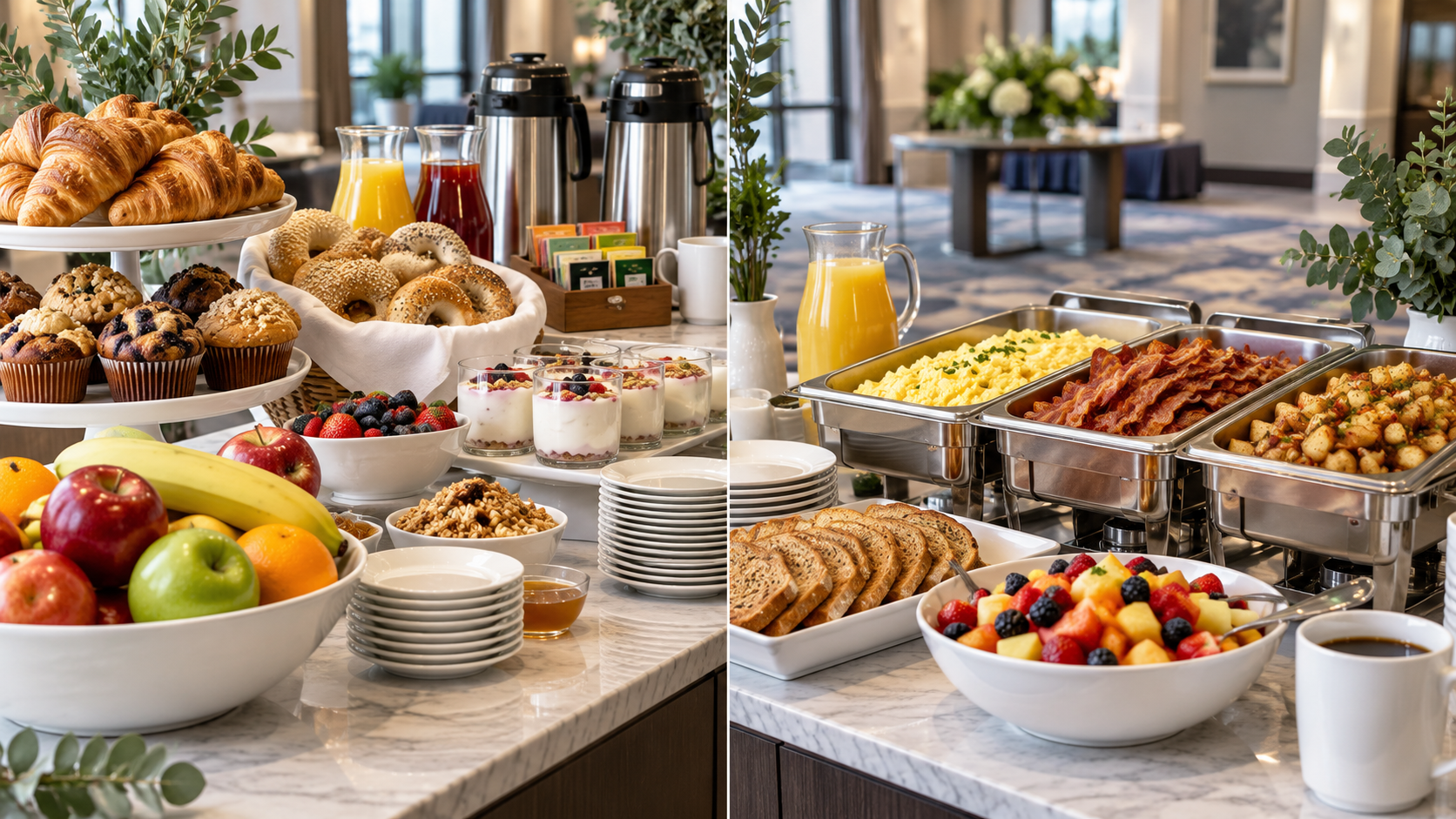
What is a full American breakfast?
A full American breakfast is the more substantial of the two options. It typically includes:
Scrambled eggs
Bacon and/or sausage
Breakfast potatoes
Assorted sliced fruit
Pastries and breakfast breads
Butter, preserves and other accompaniments
Most hotels also include regular coffee, decaffeinated coffee and hot tea in the per-person price. However, this should always be confirmed when reviewing the banquet menu.
What is a continental breakfast?
A continental breakfast is a lighter and more basic option. It typically includes:
Assorted pastries and breakfast breads
Whole or sliced fruit
Butter, preserves and other accompaniments
Some hotels may also include yogurt, yogurt parfaits, oatmeal or cold cereal. Coffee, decaffeinated coffee and hot tea are often included in the per-person price, but inclusions vary by hotel.
What should you consider when comparing the menus?
1. Check the minimum number of attendees required.
Hotels often require a minimum guaranteed number of attendees to order a full American breakfast buffet. This is due to the labor and setup required to prepare and maintain the buffet.
Each hotel establishes its own minimum, but I frequently see 50 attendees used as the benchmark. If you have a smaller group but still want to provide protein, consider ordering the continental breakfast and adding breakfast sandwiches, breakfast burritos or hard-boiled eggs.
2. Pay attention to how the fruit is described.
“Assorted fruit” does not always mean a platter of sliced melon and berries. Some hotels may provide whole apples, oranges, pears or bananas instead.
If sliced fruit is important to you, request it specifically and make sure it is clearly listed on the banquet event order.
3. Confirm which beverages are included.
Coffee, decaffeinated coffee and hot tea are commonly included, but cold beverages may not be. Bottled water, juice, soft drinks and specialty coffee beverages could carry an additional per-person or consumption-based charge.
Coffee can also be surprisingly expensive at hotels, so confirm whether the service will be refreshed throughout breakfast or removed at a specific time.
4. Consider dietary restrictions.
Review whether the menu provides appropriate options for attendees who are vegetarian, vegan, gluten-free or managing food allergies. A pastry-heavy continental breakfast may leave some attendees with very little to eat.
Ask the hotel whether dietary alternatives are included in the menu price or must be ordered separately.
5. Look beyond the advertised per-person price.
The banquet menu price is generally not the final cost. Service charges, administrative fees and sales tax may be added to the listed price and can significantly increase the total.
For example, a breakfast listed at $45 per person could cost considerably more once all mandatory charges and taxes are applied.
6. Think about the meeting schedule.
A full American breakfast generally requires more time because attendees will need to move through the buffet and sit down to eat. A continental breakfast can work well for an early meeting, a short networking period or a group that needs a convenient grab-and-go option.
No matter which breakfast you select, review exactly what is included, confirm the guaranteed attendance requirements and make sure the final menu is accurately reflected on the banquet event order.